


Part two of two | Ethica Diamonds, Newquay, Cornwall
In part one we looked at energy use, carbon emissions, and the sheer scale of earth moved in the pursuit of mined diamonds. This second part covers the areas that are, if anything, even more important - water, broader environmental damage, and the human beings at the centre of it all.

Water Use
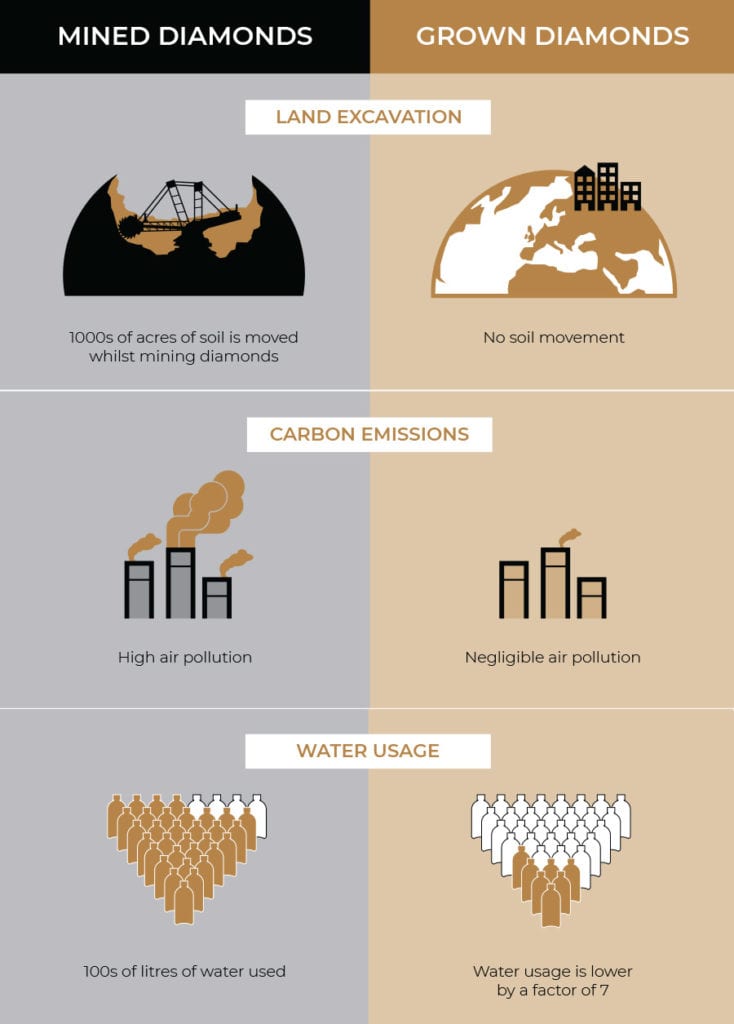
According to the Frost and Sullivan report, the mined diamond industry uses approximately 480 litres of water per carat extracted. Lab grown diamonds use approximately 70 litres per carat - less than a seventh of the mined diamond figure.
It is fair to acknowledge that the more environmentally regulated mining countries -Canada, Australia, the United States, and South Africa - have made meaningful efforts to reduce their water consumption. This is genuinely positive. It is also worth noting that these countries represent the responsible end of an industry where many operations are considerably less careful.
The water used in lab grown diamond production is largely recirculated within the process rather than drawn from local water sources and discharged downstream. The difference in impact on local water systems is significant, particularly in regions where clean water is already scarce.
The Broader Environmental Picture
There is no objective way to measure total environmental damage that captures every dimension - the surface area of land destroyed, the impact on local water systems, the effects on biodiversity, the disruption to wildlife migration routes, the long-term contamination of soil. But whichever lens you choose, the conclusion is consistently the same.
Mined diamond production causes substantially more environmental damage than lab grown production. This holds true even when you use the most charitable available figures for the mining industry and the least flattering figures for lab grown production.
The Trucost report - commissioned by the Diamond Producers Association - is admirably positive about the land reclamation efforts of its seven member companies. What it does not discuss in any meaningful depth is the 25% of global diamond production that does not come from those seven companies, and where environmental standards are considerably more relaxed. Venezuela's Orinoco Mining Belt, where the government has effectively placed mining activities above environmental law, is one particularly stark example. It does not feature in the DPA's figures.
There is also the question of what land reclamation actually means in practice. Replanting vegetation over a worked-out mine and declaring the land restored does not restore the ancient peat bogs, the old growth forest, or the salmon spawning grounds that took thousands of years to develop. It means the land is green again. It does not mean the ecosystem has recovered.
You cannot restore in five years what took ten thousand years to form. Land reclamation is a genuine effort and better than nothing. It is not the same as restoration.

The Human Cost - An Honest Look
This is where the conversation becomes most uncomfortable, and where we want to be most careful to be fair.
Supporters of mined diamonds frequently cite the ten million people employed by the global diamond mining industry as a reason to continue buying mined stones. They argue that shifting demand towards lab grown diamonds would condemn these workers and their communities to poverty.
It is a genuinely important point. But it deserves a genuinely honest response.

Why are mining communities still poor?
If diamond mining is so valuable to local communities, the obvious question is why so many of those communities remain among the poorest in the world. The answer, in most cases, is that the value generated by diamond mining does not stay in the communities where it is extracted.
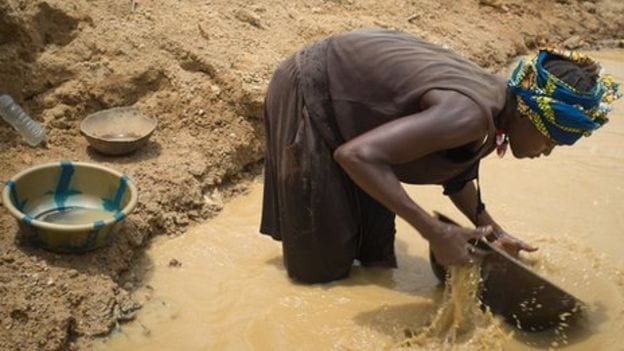
Mine owners and international investors capture the majority of the returns. The workers themselves - particularly in developing nations - are frequently paid less than a dollar a day. They live without adequate housing, healthcare, or education infrastructure. Their children often choose paid work in the mine over school, not because they prefer it, but because the family cannot survive without the income. The cycle of poverty is a feature of the system, not an accident.
Working conditions
In regulated mining countries, working conditions in diamond mines are subject to meaningful health and safety oversight. In many other regions they are not. Long hours, no protective equipment, exposure to explosives and noxious chemicals, dust-related lung disease, and high rates of HIV in workers' camps are well documented features of unregulated diamond mining operations. These are not edge cases. They are the reality for a significant proportion of the industry's workforce.
The broader community impact
Beyond the workers themselves, the communities surrounding diamond mines are affected in ways that extend well beyond employment. When mining operations contaminate local water sources, communities have no choice but to drink, cook, and farm with contaminated water. When forests that provided food are cleared for mining infrastructure, communities lose a food source with no compensation. When a mine closes and the pit fills with stagnant water, the surrounding community inherits a malaria risk that will outlast the mining company by decades.
The argument that mining communities need the mines to survive is, in many cases, more accurately stated as: mining communities have been made dependent on the mines by the destruction of the alternatives.
What About Lab Grown Diamond Workers?
Lab grown diamond production takes place in laboratories, by trained staff, under regulated conditions, with appropriate health and safety protections. It does not generate extraordinary wealth for local communities - but it does not generate the vicious cycle of poverty, environmental destruction, and dependency that characterises much of the mined diamond industry either.
The comparison is not between a perfect industry and an imperfect one. It is between an industry with serious, well-documented, and ongoing problems, and an industry that is far from perfect but is substantially less harmful across almost every measure that matters.

Where We Stand
We are not going to pretend that lab grown diamonds are without any environmental cost. Growing diamonds in a laboratory requires energy, and the source of that energy matters enormously. This is why at Ethica Diamonds we only work with producers using renewable energy or verified carbon offsetting, and why we are transparent about that rather than making vague claims.
What we can say with confidence, based on the best available evidence, is this: lab grown diamonds are significantly better for the environment than mined diamonds across every major category - energy, water, land use, air emissions, and biodiversity impact. And the human story behind a lab grown diamond is, by any honest reckoning, far less troubling than the human story behind most mined stones.
We are based in Newquay, Cornwall, next to an ocean we care about deeply. These are not abstract concerns for us. They are the reason we exist.
The Complete Series
The True Cost of Mined Diamonds: What Happens to the Land →
The True Cost of Mined Diamonds: What Happens to the Water →
The True Cost of Mined Diamonds: What Happens to the Wildlife →
The True Cost of Mined Diamonds: The Human Cost →
Lab Grown Diamonds and the Environment: The Honest Truth →
Choose a lab grown diamond from Ethica →
Browse our full collection at ethicadiamonds.com or book a free consultation with our team in Newquay - in person or virtually from anywhere in the UK.


